

Timeline: A day-by-day guide to the 10-day Artemis II mission to bring humanity back to the moon
What can we expect during this 10-day journey? When will we see the astronauts, reach the Moon, or enter a communications blackout? Here’s a breakdown of the key milestones.
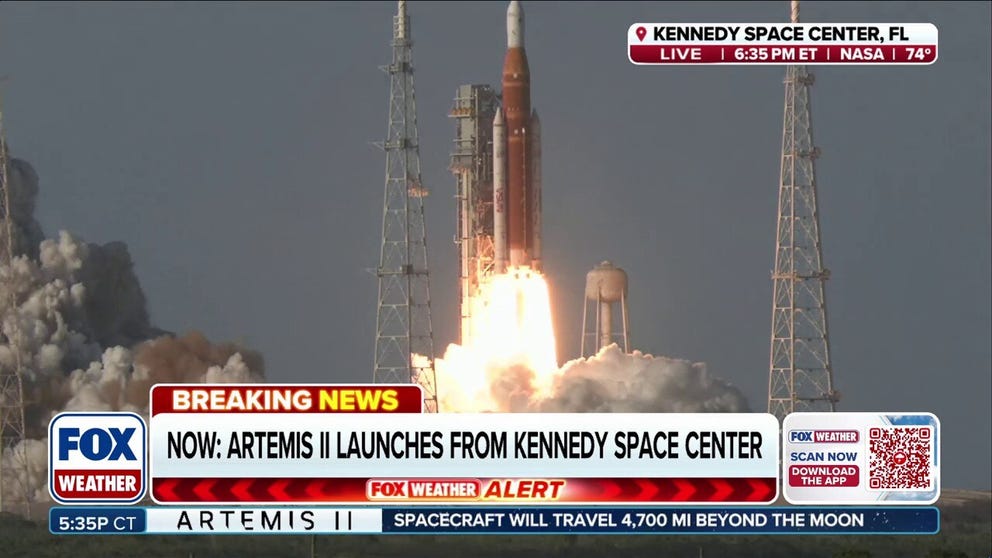
Artemis II lifts off from Kennedy Space Center
NEXT STOP, SPACE 🚀: Artemis II is roaring into space on a mission to make history after liftoff from Kennedy Space Center in Florida. This is humanity’s return to deep space, and at the beginning of a bold journey around the Moon. Stay locked with FOX Weather for every second of this historic mission.
At 6:35 PM EDT on Wednesday, April 1, history was made! The Artemis II mission successfully launched all four crew members into space.
This is not only a monumental moment in American history but also a historic milestone for the world, as this mission will help shape the future of space exploration for generations to come.
![NASA's Artemis II Space Launch System rocket carrying the Orion spacecraft lifts off from Launch Complex 39B at Kennedy Space Center on April 1, 2026 in Cape Canaveral, Florida.]() Image 1 of 5
Image 1 of 5NASA's Artemis II Space Launch System rocket carrying the Orion spacecraft lifts off from Launch Complex 39B at Kennedy Space Center on April 1, 2026 in Cape Canaveral, Florida. (@nasahqphoto / X)
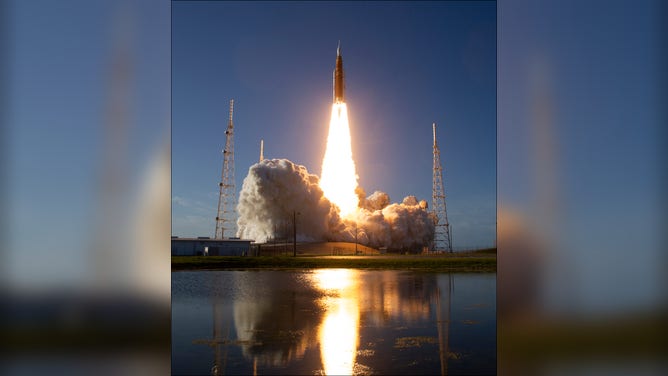
![]() Image 2 of 5
Image 2 of 5The two solid rocket boosters separate from NASA's Artemis II Space Launch System (SLS) rocket and Orion spacecraft are seen as it soars into orbit after lifting off from Launch Pad 39B at the Kennedy Space Center in Cape Canaveral, Florida on April 1, 2026. (Gregg Newton / AFP via Getty Images)
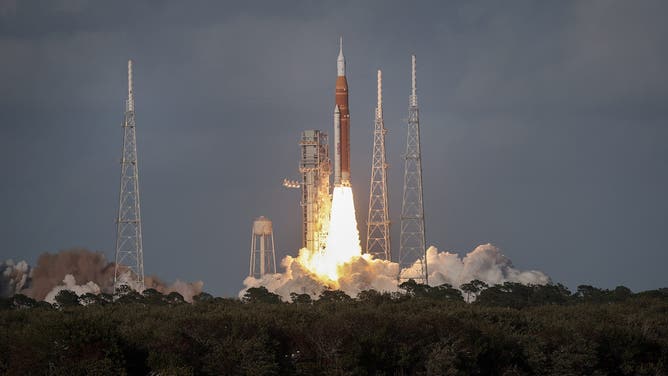
![]() Image 3 of 5
Image 3 of 5NASA's Artemis II Space Launch System rocket carrying the Orion spacecraft lifts off from Launch Complex 39B at Kennedy Space Center on April 1, 2026 in Cape Canaveral, Florida. (Photo by Joe Raedle/Getty Images)
![]() Image 4 of 5
Image 4 of 5The Artemis II crewed lunar mission launches at Kennedy Space Center in Cape Canaveral, Florida, on April 1, 2026. Four astronauts blasted off aboard a massive NASA rocket April 1 on a long-anticipated journey around the Moon, the first crewed lunar flyby in more than 50 years. With an intense roar that reverberated far beyond the launchpad, the enormous orange-and-white rocket carried three Americans and one Canadian away from Florida's Kennedy Space Center at approximately 6:35 pm local time, according to an AFP journalist onsite. "We're going to the Moon!" yelled a spectator. (Photo by Jim WATSON / AFP via Getty Images) ( )
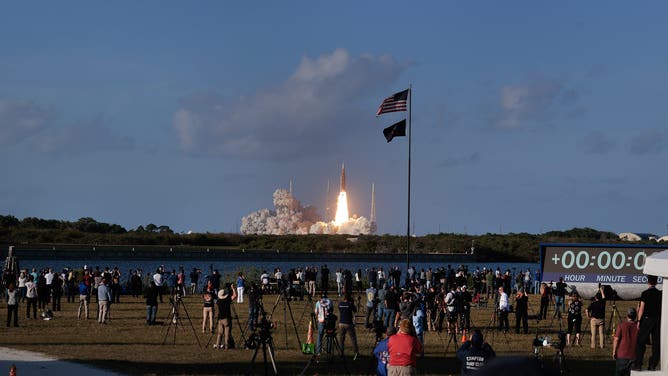
![]() Image 5 of 5
Image 5 of 5People watch as NASA's Artemis II Space Launch System rocket carrying the Orion spacecraft lifts off from Launch Complex 39B at Kennedy Space Center on April 1, 2026 in Cape Canaveral, Florida. (Chip Somodevilla/Getty Images)
It’s been over 50 years since humanity last embarked on such a bold journey beyond Earth, and Artemis II marks the next chapter in the quest to explore space.
LIVE UPDATES: ARTEMIS II LAUNCH FINAL COUNTDOWN UNDERWAY TO SEND ASTRONAUTS AROUND THE MOON
This mission will set the stage for future lunar landings, as it will test life-support systems, navigation, and spacecraft performance in deep space—and may even pave the way for humanity’s journey to Mars.
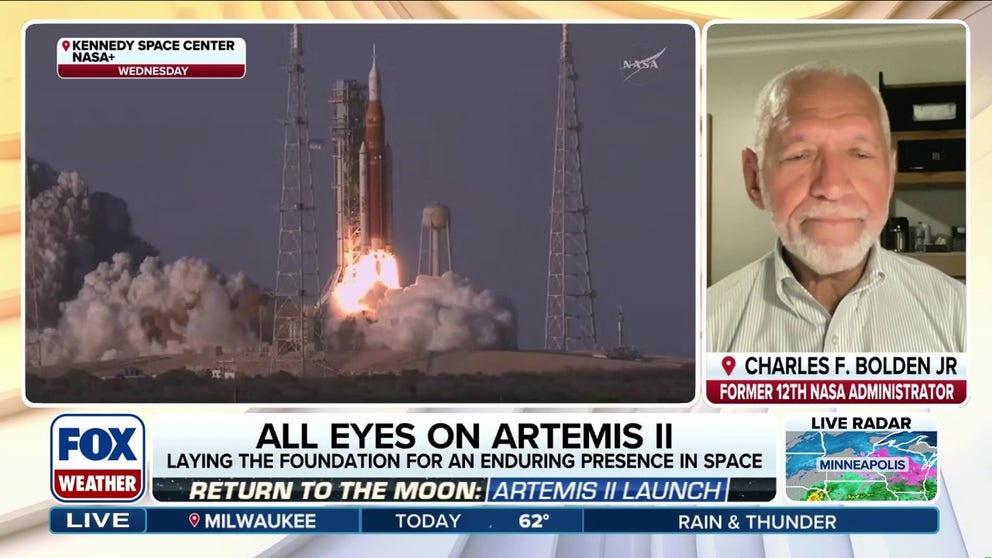
Former NASA administrator cals Artemis II mission a ‘baby step’ to Mars
Former 12th NASA Administrator Charles F. Bolden Jr. joins FOX Weather following the successful and historic launch of Artemis II. And the mission is much more than a trip to the Moon, as Bolden describes it as a vital "baby step
NASA astronauts Reid Wiseman, Victor Glover, Christina Koch and CSA astronaut Jeremy Hensen are aboard the Orion spacecraft, which will carry them around the moon and back to Earth over 10 days.
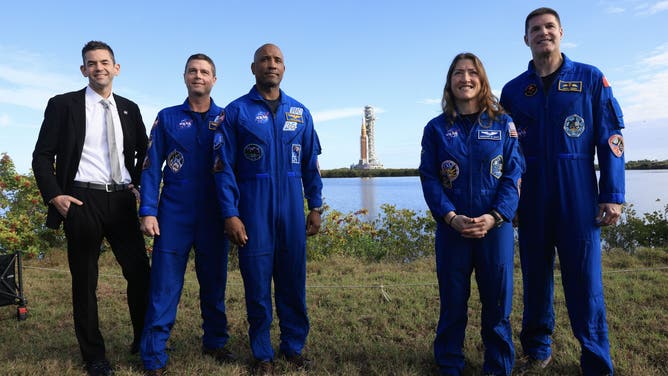
NASA Administrator Jared Isaacman, Artemis II Commander Reid Wiseman, pilot Victor Glover, mission specialist Christina Koch, and Jeremy Hansen pose for a photo as NASA's Artemis II is rolled from the Vehicle Assembly Building to Launch Pad 39B at NASA’s Kennedy Space Center.
(Photo by Joe Raedle/Getty Images / Getty Images)
But what exactly can we expect during the 10-day journey? When will we see the astronauts? When will they reach the Moon? How far will they travel? And when might they enter a communications blackout? Let’s break it down through NASA's day-by-day guide.
Day 1 (April 1)— Launch and ‘test drive’
After a successful launch and 'test drive' of Orion’s manual controls, the Artemis II crew is finishing a critical 24-hour systems check.
From refining their orbit to testing the space toilet—which required a minor fix and has since been resolved—the team is ensuring every life-support system is ready before tonight's Day 2 engine burn sends them 230,000 miles away from home, NASA said.
Day 2 (April 2)— Departure for the Moon, first live video from cabin
Day 2 is all about the Translunar Injection burn.
After testing life-support systems with high-intensity workouts, the crew—led by Mission Specialist Christina Koch—will fire Orion’s 6,000-lb thrust engine to leave Earth’s orbit.
MEET THE ASTRONAUTS PREPARING FOR HUMANITY’S RETURN TO THE MOON ON THE ARTEMIS II MISSION
This critical maneuver is the Translunar Injection (TLI) burn.
According to NASA, once the crew is on its way, we’ll see the first of several live videos from the cabin as the astronauts settle in for the long journey.
Day 3 (April 3)—Deep space system check
On day 3 of the journey, the mission shifts from leaving Earth to moving into deep space.
After Jeremy Hansen leads the first minor course correction to keep Orion on target for the Moon, the crew will transition into medical drills—including practicing CPR in zero-gravity.
Christina Koch will also verify the emergency 'backup' communications systems as the team prepares for their high-speed lunar flyby.
Day 4 (April 4)— Trajectory correction
Day 4 is all about fine-tuning the approach to the Moon.
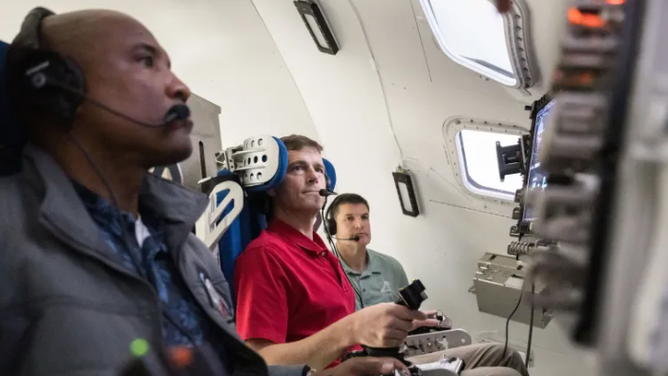
NASA astronauts Victor Glover and Reid Wiseman, and CSA (Canadian Space Agency) astronaut Jeremy Hansen train during an Artemis II simulation
(NASA/James Blair)
Between refining their path with a second correction burn and studying lunar maps, the crew is preparing for their close-up with the Moon.
They’ll also have dedicated time to capture what will likely be some of the most iconic deep-space photos of the century.
Day 5 (April 5)— Entering the Moon’s influence
Day 5 marks the moment the Moon’s gravity officially takes over.
As Orion enters the 'lunar influence,' the crew will conduct high-stakes drills in their orange survival suits, proving they can eat, drink, and live in them for days if the cabin loses pressure.
One final steering adjustment in the afternoon will line them up for the day 6 historic lunar flyby.
Day 6 (April 6)— The lunar flyby and comms blackout
Day 6 will bring the astronauts closest to the Moon, meaning they will be traveling the farthest from Earth.
The crew is expected to break the 50-year-old record for the farthest distance humans have ever traveled from Earth as they swing around the Moon's far side. This would surpass the current record of 248,655 miles from Earth, set in 1970 by the Apollo 13 crew.
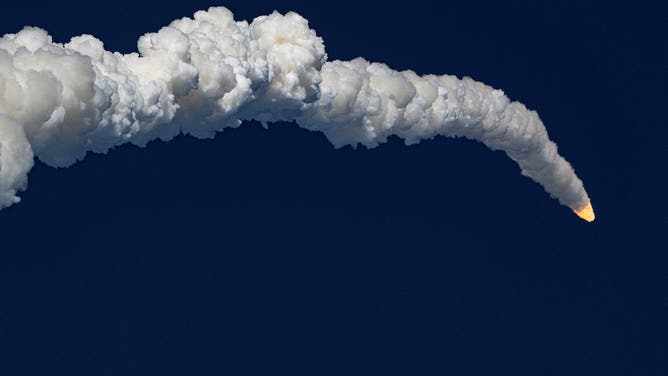
The Artemis II crewed lunar mission launches at Kennedy Space Center in Cape Canaveral, Florida, on April 1, 2026. Four astronauts blasted off aboard a massive NASA rocket April 1 on a long-anticipated journey around the Moon, the first crewed lunar flyby in more than 50 years. With an intense roar that reverberated far beyond the launchpad, the enormous orange-and-white rocket carried three Americans and one Canadian away from Florida's Kennedy Space Center at approximately 6:35 pm local time, according to an AFP journalist onsite. "We're going to the Moon!" yelled a spectator. (Photo by Jim WATSON / AFP via Getty Images)
During a planned 30–50 minute communications blackout, the astronauts will become the first humans in decades to see the lunar surface up close, documenting craters and ridges that will look as large as a basketball held at arm's length.
Day 7 (April 7)— The journey home
On day 7, Orion will exit lunar influence and prep "for the first of three return trajectory correction burns that will adjust Orion’s path home," stated NASA.
NASA'S ARTEMIS MISSIONS: EVERYTHING YOU NEED TO KNOW AHEAD OF THE HISTORIC MOON LAUNCH
After exiting the Moon’s gravitational pull, the crew will perform the first steering adjustment to aim Orion back toward Earth.
Between scientific debriefs, the four astronauts will finally get some off-duty time to rest before the final stretch of the mission.
Day 8 (April 8)— Science and manual flying
According to NASA, "the primary activities for flight day 8 include two Orion demonstrations."
The crew will practice building an emergency radiation shelter inside the cabin to prepare for solar flares.
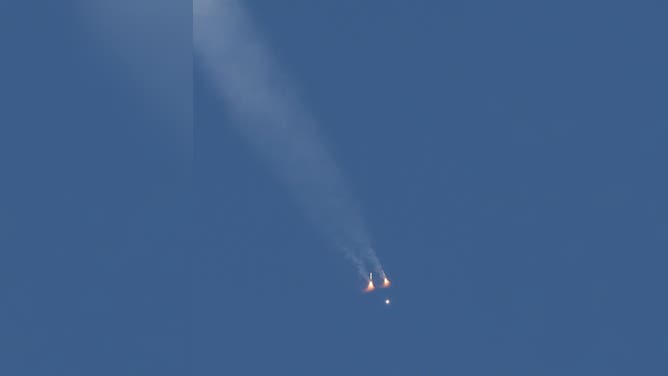
The two solid rocket boosters separate from NASA's Artemis II Space Launch System (SLS) rocket and Orion spacecraft are seen as it soars into orbit after lifting off from Launch Pad 39B at the Kennedy Space Center in Cape Canaveral, Florida on April 1, 2026.
(Gregg Newton / AFP via Getty Images / Getty Images)
To end the day, the astronauts will take manual control of Orion for a series of deep-space flight maneuvers to prove they can pilot the ship home if the automated systems fail.
Day 9 (April 9)— Final re-entry prep
This will be Artemis II’s last full day in space before splashdown on Day 10.
The crew will have time to review and study procedures for reentry to Earth.
"Another return trajectory correction burn will ensure the spacecraft remains on target for that return," the agency said.
HISTORY MADE: NASA'S MOON ROCKET ROARS TO LIFE LAUNCHING ON ARTEMIS 1 TEST FLIGHT
The astronauts will test compression garments to prevent fainting once they hit Earth’s gravity, review reentry procedures, and test backup waste systems as they prepare their bodies for the plunge back into the atmosphere.
Day 10 (April 10)— Splashdown in the Pacific
The last day of the mission is focused on getting the astronauts home safely.

Live from Kennedy Space Center: What’s next for Artemis II
FOX Weather Correspondent Brandy Campbell reports live from Kennedy Space Center in Cape Canaveral, Florida, continuing her coverage of last night’s historic Artemis II launch as we look ahead at what to expect during the 10-day mission!
The crew will face a temperature up to 3,000 degrees Fahrenheit as they re-enter Earth's atmosphere.
Slowed by a series of parachutes, the Orion capsule will splash down in the Pacific Ocean at just 17 mph, where the U.S. Navy will be waiting to welcome the first lunar travelers of the 21st century home.